
If you fell into a coma back in 2020 and just woke up today, I have bad news and weird news. The bad news is that traditional search engine optimization is gasping for air on life support. The weird news is that your target audience isn’t clicking on blue hyperlinks anymore; they are having long, late-night philosophical heart-to-hearts with generative AI agents.
Welcome to the landscape of search, where ranking on the classic first page of Google is roughly as impactful as renting a highway billboard in an abandoned town. Today, visibility belongs to Generative Engine Optimization (GEO)—the craft of convincing conversational models like ChatGPT, Perplexity, Gemini, and Claude that your website is the definitive source of truth across the web.
What On Earth Is GEO Anyway?
For decades, search engine optimization was a predictable game. You picked a focus keyword, repeated it until your writing sounded slightly robotic, built a few backlink connections, and prayed the search algorithms smiled upon you.
GEO throws that script out the window. Generative search engines do not hand users a list of addresses to go visit; they read everything on those pages, digest the facts, and write a custom answer right on the spot.
| Classic SEO | Generative Engine Optimization (GEO) |
| Focuses on matching exact keywords | Focuses on providing clear, factual entities and context |
| Goal: Win the blue click on search page 1 | Goal: Get cited as the primary authority in the synthesized answer |
| Measures success via click-through rate (CTR) | Measures success via inclusion rate, brand mentions, and sentiment |
| Content built to keep users on a webpage | Content structured so an AI model can summarize it without errors |
In plain English: If SEO was about showing up to the party with a neon t-shirt, GEO is about being the person everyone quotes after the party is over.
Why Old-School Search Habits Broke Down
Nobody actually misses sifting through twelve recipes to find out how long to boil an egg just to dodge life stories about a food blogger’s summer trip to Tuscany. Users got tired of dodging sponsored banners, clickbait headlines, and affiliate traps.
When conversational answers arrived, people realized they could ask complex, messy questions and receive an answer immediately:
-
“Find me a project management tool for a four-person remote team that integrates with Slack and costs less than $30 a month.”
-
“Compare the maintenance costs of heat pumps versus gas furnaces over five years in a cold climate.”
A traditional search engine responds with ten separate websites you need to cross-check yourself. A generative engine answers the prompt directly and attaches footnotes to prove it didn’t hallucinate the numbers. If your business isn’t one of those footnotes, you don’t exist to that shopper.
The Core Pillars of Modern GEO Strategy
Getting quoted by a language model isn’t magic, and despite what LinkedIn gurus might sell you, there is no secret code you paste into your header. Large language models reward structure, verifiable claims, and genuine perspective.
1. Write in Direct Information Bundles
Language models love answers that can be extracted cleanly. If your article buries a basic answer beneath 500 words of filler, the model will simply fetch the fact from your competitor who had the decency to put it in the opening sentence.
-
Lead with the takeaway: Answer the core question directly in the very first sentence under a heading.
-
Keep sentences crisp: Long, run-on sentences with five dependent clauses tend to get lost in the processing pipeline.
-
Define things clearly: Use direct patterns, such as “X is a Y that does Z,” so the model can catalog your definitions without second-guessing.
2. Back Up Every Claim with Hard Data
Language models are notorious for making things up when backed into a corner. Because developers train modern engines to avoid hallucinations at all costs, the algorithms actively look for anchors: statistics, verified dates, research papers, and attributed quotes.
Instead of writing:
“Most marketing teams waste lots of money on underutilized tools.”
Write this:
“A 2026 SaaS utilization report showed that mid-market teams left 38% of their software licenses completely unassigned.”
The second sentence gives the AI a clear, high-confidence data point to reference. You provide the anchor, and the engine awards you the footnote.
3. Build Deep Entity Relationships
AI models understand the world through entities (people, places, concepts, brands) and the relationships connecting them. You want your brand or website to be permanently associated with your niche.
-
Connect your brand name directly to the specific problems you solve across your pages.
-
Mark up your site using clean, modern schema protocols so machines can parse your authors, reviews, and pricing models without guesswork.
-
Maintain consistent naming conventions across the entire web, from social platforms to industry directories.
Formatting Content So Machines (and Humans) Can Scan It
Generative systems parse content rapidly, sorting through hundreds of documents in fractions of a second to build an answer. Visual chaos makes their job harder. The best GEO content happens to be the easiest content for regular people to skim on their lunch break.
Actionable Layout Rules for Content Creators
-
Use Bulleted Breakdowns: Bullet points organize scattered ideas into discrete concepts that an AI summarizer can lift without losing context.
-
Build Direct Comparison Tables: Whenever you compare two products, methods, or frameworks, put them in a table. Language models parse tabular rows and columns with exceptional precision.
-
Embrace Single-Topic Headings: Avoid witty, mysterious headings like “A Glimpse Into Tomorrow.” Use functional headings like “How Battery Storage Lowers Peak Electric Rates” so the crawler knows exactly what knowledge block it is inspecting.
The Survival Checklist for Digital Publishers
Transitioning your digital strategy from old-school ranking to generative citation requires a shift in how you evaluate success. Here is a practical game plan to keep your site relevant:
-
Audit your current search footprint: Search for your main services inside AI assistants. Take note of which competitors get cited and read what the engine says about them.
-
Cut the website fluff: Strip away decorative, empty introductions. If a paragraph doesn’t contain a fresh fact, a working example, or a clear opinion, cut it out.
-
Add original commentary: AI models already know the baseline encyclopedia definition of everything. What they lack is first-hand experience. Document real experiments, show genuine photos, and share contrarian lessons learned from actual mistakes.
-
Monitor your brand sentiment: Because generative engines synthesize commentary, negative reviews and unresolved complaints across community forums can bleed directly into how an AI summarizes your service.
Looking Ahead
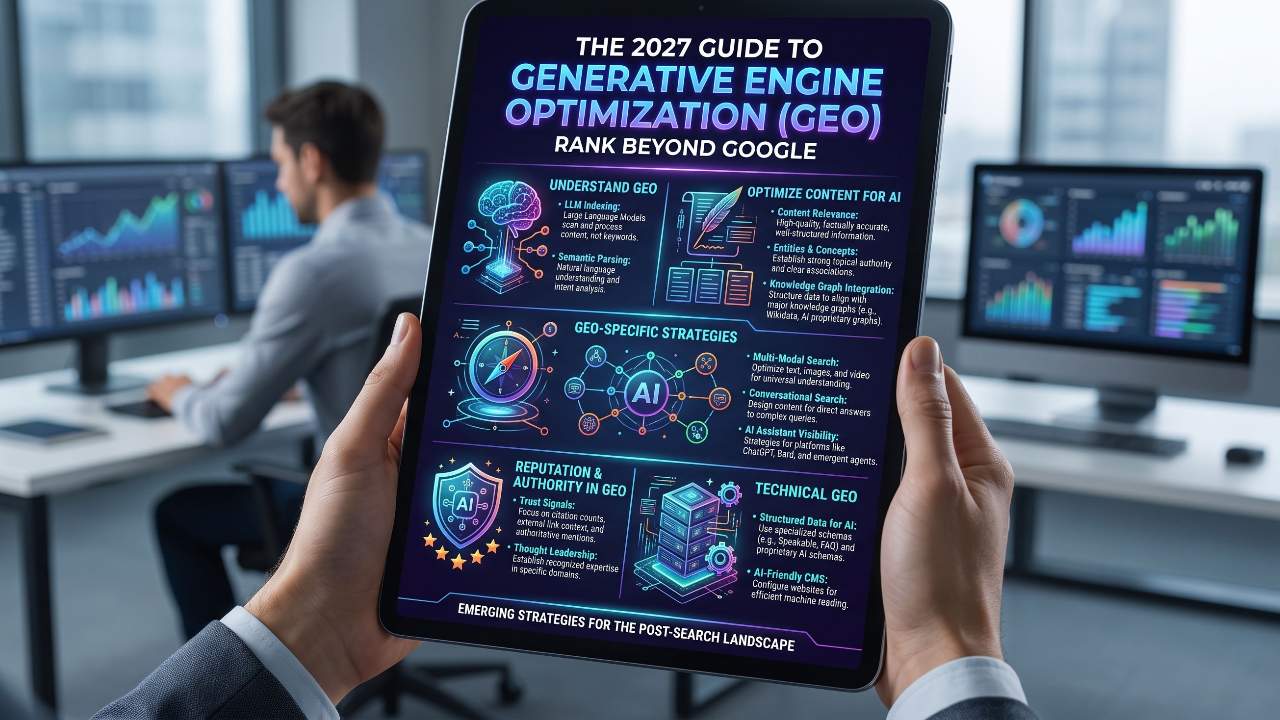
The internet didn’t break; it just finally learned how to talk back. Adapting to Generative Engine Optimization isn’t about outsmarting a robot with sneaky technical loopholes. It is about publishing clear, authoritative, and data-backed information that both humans and intelligent machines can actually use without getting a headache.